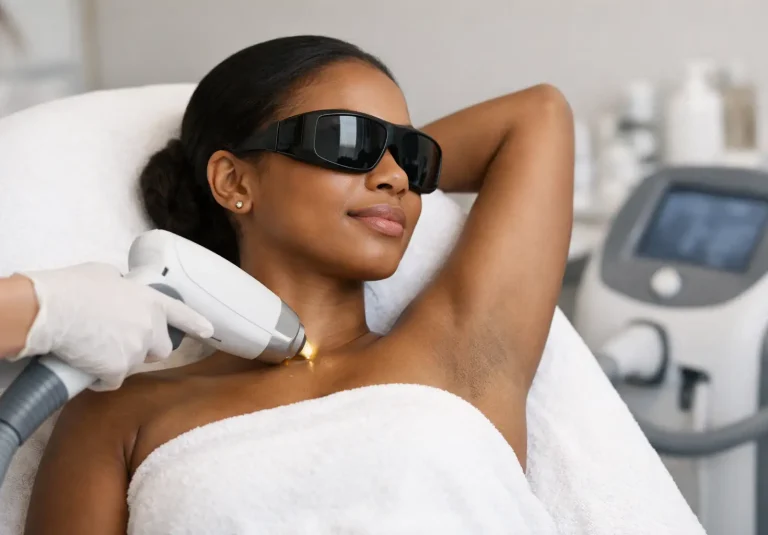
If shaving leaves you with irritation, ingrown hairs or stubborn shadowing, the idea of longer-lasting hair reduction can feel like a genuine relief. Yet many people with deeper skin tones have been told, directly or indirectly, that laser is not for them. That is outdated. Laser hair removal for dark skin can be a safe, effective option when it is planned around your individual skin tone, hair type and treatment area – not approached with a one-size-fits-all setting.
The difference lies in the technology, the practitioner’s knowledge and the care taken before your first session. A proper consultation and patch test are not formalities. They are the foundation of a treatment plan designed to reduce hair growth while respecting the health and appearance of your skin.
Why darker skin needs a tailored laser approach
Laser hair removal works by directing light energy towards melanin, the pigment that gives hair its colour. The laser converts that energy into heat, disrupting the hair follicle during its active growth phase. Because darker skin naturally contains more melanin, the wrong laser or an overly aggressive setting may also target pigment in the surrounding skin.
This is why older laser systems earned a poor reputation among clients with brown and Black skin. In inexperienced hands, treatment could carry a greater risk of overheating, blistering or temporary changes in pigmentation. The answer is not to avoid laser altogether. It is to use suitable technology and settings, with an experienced practitioner who understands how different skin tones respond.
For many clients with darker complexions, a long-pulsed Nd:YAG laser is often the preferred choice. Its 1064 nm wavelength reaches deeper into the skin, targeting the follicle while being less readily absorbed by surface melanin than some other laser types. That makes it particularly well suited to deeper Fitzpatrick skin types. However, suitability is always individual. Hair colour, hair thickness, hormones, recent sun exposure and the area being treated all matter.
Is laser hair removal for dark skin safe?
When the right system is selected and treatment is delivered following a thorough assessment, laser hair removal for dark skin is widely considered safe. No aesthetic treatment is completely risk-free, though, which is why your clinic should be transparent about both expected effects and possible reactions.
It is normal to experience temporary warmth, redness around the follicles or mild swelling after a session. This usually settles quickly. More significant reactions, such as blistering or pigment changes, are less common but can occur if a laser is unsuitable, settings are poorly chosen, aftercare is ignored or skin has been exposed to UV before treatment.
A specialist-led clinic will take several precautions before progressing. Your practitioner should ask about your medical history, current medication, previous reactions to treatments, active skin conditions and any tendency towards post-inflammatory hyperpigmentation. They should also examine the treatment area and carry out a patch test. This small test area gives the skin time to respond before a full appointment is booked.
Be cautious of providers who promise identical settings for every client, skip patch testing or make guaranteed claims. Effective treatment should feel considered, not rushed.
The patch test matters more than you may think
A patch test allows your practitioner to assess how your skin responds to a specific wavelength and energy level. It also helps them fine-tune the treatment plan rather than relying only on a skin-type chart. You will normally be asked to wait before your first full session so any delayed reaction can be identified.
For clients who have had previous laser experiences that felt uncomfortable or disappointing, this is a valuable reset. A patch test provides a safer, clearer starting point and gives you the chance to ask practical questions before committing to a course.
What results can you realistically expect?
Laser hair removal is a programme, not a single appointment solution. Hair grows in cycles, and laser is most effective when the follicle is in its active growth stage. As not every hair is in that stage at the same time, multiple sessions are needed to treat the area thoroughly.
Most clients notice that regrowth becomes slower, finer and less dense as sessions progress. The number of treatments required varies, but a course of sessions spaced several weeks apart is common. Areas influenced by hormones, such as the face, chin, jawline and lower abdomen, may need more sessions and occasional maintenance treatments over time.
Laser works best where there is contrast between the hair and skin, but dark, coarse hair on deeper skin tones can respond very well with the right laser. Very fair, grey, white or red hair contains less melanin, so it is less likely to respond. During your consultation, a good practitioner will explain what is realistic for your hair type rather than selling an outcome that cannot be delivered.
Preparing for your appointment
Preparation protects your skin and helps make each session worthwhile. Avoid waxing, threading, plucking or using depilatory creams in the weeks before treatment, as the laser needs the hair root in place to target the follicle. Shaving is usually recommended shortly before your appointment, subject to your clinic’s advice.
Avoid tanning, sunbeds and prolonged sun exposure before and throughout your course. This matters for every skin tone, but it is especially relevant when treating melanin-rich skin because a recent tan can alter how the skin absorbs laser energy. Use a high-factor broad-spectrum SPF on exposed areas between sessions.
Tell your practitioner about any changes to your medication or health, including acne medication, antibiotics, pregnancy, hormonal changes or new skincare products. Some treatments and ingredients can increase sensitivity. Do not apply fake tan, heavy body products, perfume or active skincare to the treatment area on the day unless your clinic has said otherwise.
Aftercare that supports clear, even-looking skin
Your skin may feel warm after laser hair removal, similar to mild sun exposure. Keep the area cool and comfortable, and follow the aftercare guidance you have been given. This often means avoiding hot baths, saunas, steam rooms, vigorous exercise and friction from tight clothing for a short period after treatment.
Do not pick, scratch or exfoliate the area if it feels sensitive. You may see small dark dots or what looks like regrowth in the following days. Often, these are treated hairs working their way out of the follicle rather than new active growth. Let them shed naturally.
Sun protection is essential. UV exposure can increase the chance of pigmentation changes after laser, particularly if the skin is already irritated. If you experience unusual pain, blistering, prolonged swelling or a reaction that concerns you, contact your clinic promptly for advice rather than trying to treat it yourself.
Choosing a clinic with darker skin expertise
The quality of your consultation should influence your decision as much as the price of a package. Ask what laser technology will be used for your skin tone, whether a patch test is included and how your practitioner will adjust settings over the course of treatment. Your plan may need to change as hair becomes finer or as your skin’s condition changes with the seasons.
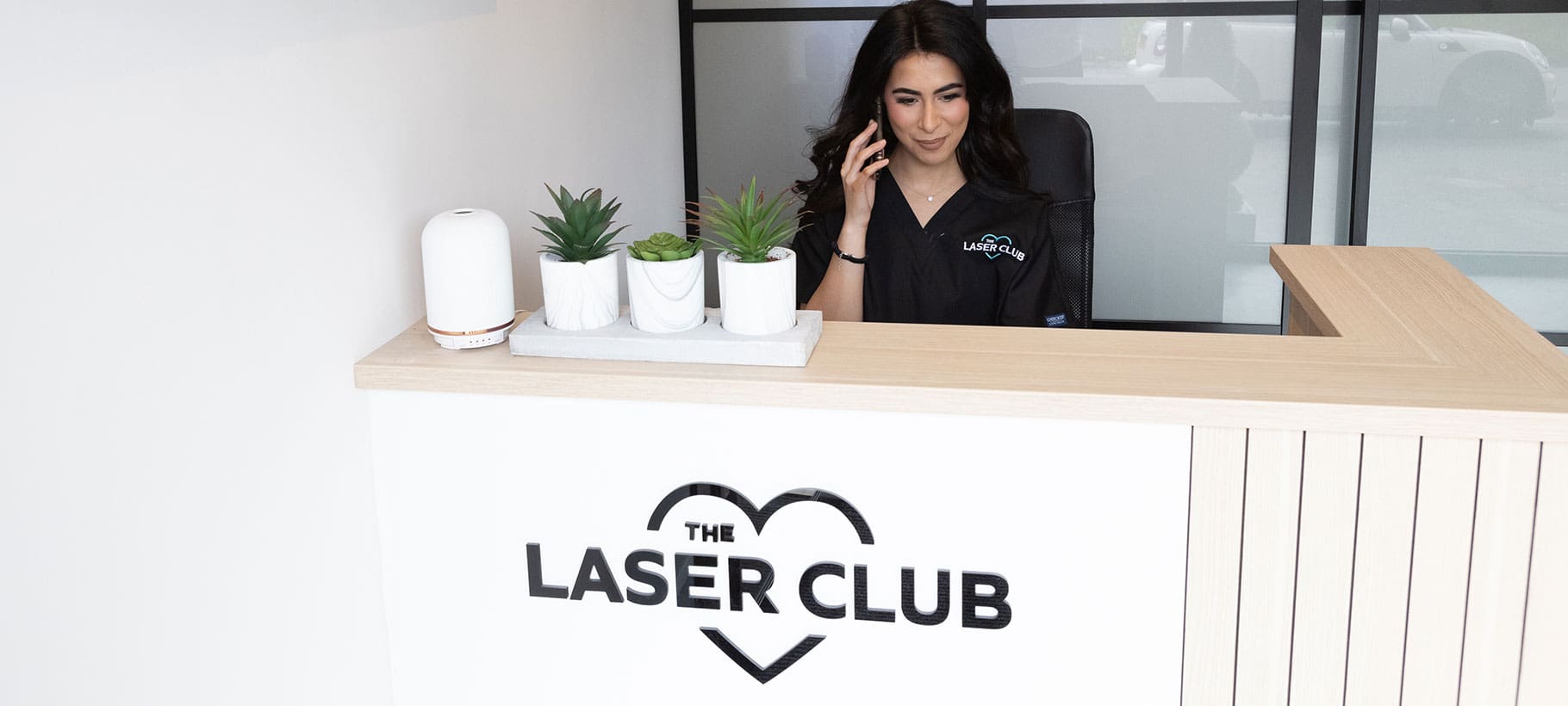
At The Laser Club, treatment plans begin with an individual assessment, including patch testing, so clients can make an informed decision before starting their course. This consultation-led approach is particularly important for darker skin, where precision supports both safety and visible, sustained results.
It is also worth considering the practical side. Choose appointments you can attend consistently, as timing matters for hair-growth cycles. If cost is a concern, ask about course packages and available payment options rather than selecting a provider based on a single low-price session. The right plan should make professional treatment manageable without compromising on safety.
A more comfortable alternative to constant hair removal
For many people, the benefit of laser goes beyond spending less time shaving or booking waxing appointments. It can reduce the cycle of razor bumps, ingrown hairs and irritation that affects confidence in areas such as the underarms, bikini line, legs, chest, back and face.
That said, laser is not a cure for every cause of unwanted hair. If you have sudden or significant changes in facial or body hair growth, it may be sensible to speak with your GP, particularly if this is accompanied by irregular periods, acne or other hormonal symptoms. Aesthetic treatment and medical advice can work alongside each other when needed.
The most reassuring next step is a professional consultation. With suitable laser technology, careful patch testing and a plan shaped around your skin, darker skin does not need to be an afterthought in laser hair removal. It deserves the same considered route to smoother, more comfortable skin.
Back to blog