A tattoo can hold a memory, mark a chapter or simply no longer reflect who you are. A laser tattoo removal programme offers a considered way to fade unwanted ink over time, with a plan built around your tattoo, your skin and the result you would like to achieve. It is not an overnight treatment, but with professional technology, realistic expectations and consistent appointments, it can be a powerful confidence-building investment.
Why tattoo removal is a programme, not a one-off treatment
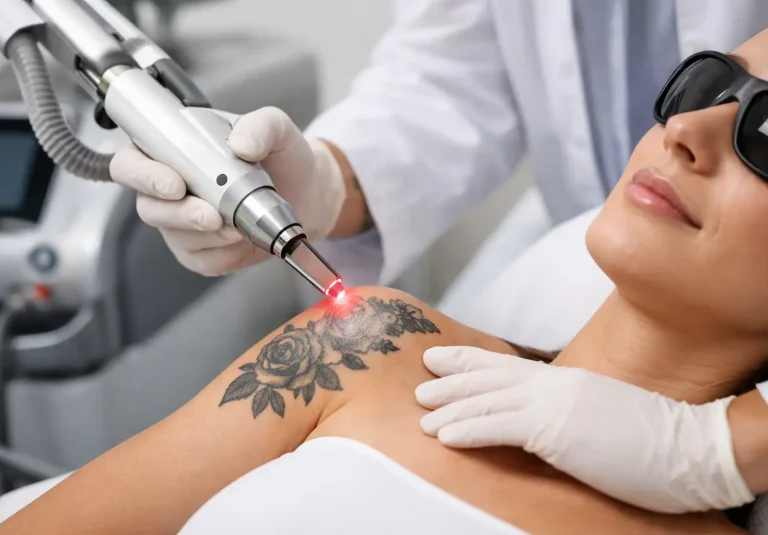
Laser tattoo removal works by directing short pulses of light into the tattoo pigment. The energy breaks ink particles into smaller fragments, allowing your body’s natural processes to gradually clear them away in the weeks following treatment.
That process takes time. A single session starts the fading process, but it cannot remove an established tattoo in one appointment. Most clients need a course of treatments, with sessions spaced apart to give the skin time to recover and the body time to process the fragmented ink. Your programme is designed around progress, rather than rushing skin through unnecessary treatments.
The number of sessions varies significantly. Small, professionally applied black tattoos may respond more quickly than large, layered designs. Amateur tattoos can sometimes fade more readily because the ink is often placed less evenly, while cover-ups may require additional patience due to their density. The location of the tattoo, its age, the colours used and your individual skin response all matter.
A specialist clinic should be open about this from the beginning. The aim is to create the best possible conditions for gradual clearance, not to promise a fixed result before your skin and ink have had the chance to respond.
Your laser tattoo removal programme starts with a consultation
A thorough consultation is the foundation of safe, effective treatment. This is where your practitioner examines the tattoo, discusses your medical history and asks what you want from the process. Some people want complete removal; others want enough fading to make a cover-up design easier and more successful.
Your practitioner will consider the tattoo’s size, placement, colour and saturation, alongside your skin tone and sensitivity. They will also discuss factors that may affect suitability, such as pregnancy, certain medications, active skin conditions, recent sun exposure or a history of poor healing. This is a reassuring part of the process, not a barrier. It helps ensure that your treatment plan is appropriate for you.
A patch test is usually carried out before a full session. This allows the practitioner to assess how your skin responds to the laser and choose suitable treatment settings. It is particularly valuable for clients with deeper skin tones, coloured ink or a history of sensitivity.
At The Laser Club, consultations are designed to give you clarity before you commit to a course. You should leave knowing what is likely to be involved, how appointments fit around your schedule and what your payment options look like.
What happens during each appointment
On the day of treatment, the area is cleaned and prepared. Protective eyewear is worn by both you and your practitioner, and the laser is applied across the tattoo in controlled passes. Sessions are often relatively quick for smaller designs, although larger pieces naturally take longer.
Most clients describe the sensation as sharp and warm, similar to an elastic band snapping against the skin. Comfort levels differ from person to person and can depend on the tattoo’s location. Areas with less natural padding, such as the ankle, ribs, fingers or feet, may feel more intense. Cooling measures can help make the appointment more comfortable.
You may notice the tattoo temporarily whitening or frosting during treatment. This is a normal immediate response as the laser energy interacts with the pigment. The area can then look red, feel tender or become slightly swollen, much like mild sunburn. These effects are usually temporary, but your practitioner will explain what is normal for your treatment and when to get in touch.
How long does tattoo removal take?
There is no universal timetable, and that is one of the most important things to understand before beginning. Treatments are commonly scheduled several weeks apart, often six to eight weeks or longer depending on your skin’s response and the treatment area. More time between sessions can be appropriate in some cases, particularly as the tattoo becomes lighter.
Black and dark blue inks generally respond well because they absorb laser energy effectively. Green, turquoise, yellow, white and some pale shades can be more resistant, and multicoloured tattoos may require different laser settings across the design. Cosmetic tattoos and permanent make-up need especially careful assessment, as some pigments can darken before they begin to fade.
Lifestyle plays a role too. A tattoo on an area with stronger circulation may clear differently from one on the hands or lower legs. Following aftercare, avoiding sun exposure and attending appointments consistently all support the process. Your practitioner will review progress as your programme develops and adjust the approach where appropriate.
Aftercare protects your skin and your results
The work does not end when you leave the clinic. Your skin needs a little time and attention after every session. Keep the treated area clean and dry as advised, avoid picking or scratching, and wear loose clothing if friction is likely to irritate the skin.
For the first few days, avoid heat and activities that can increase irritation, including hot baths, saunas, steam rooms and strenuous exercise. Swimming should also wait until the skin has settled. If blisters or scabbing occur, do not interfere with them. Allowing the skin to heal naturally is essential for reducing the chance of unwanted marks.
Sun protection is particularly important throughout your programme. Tanned or sun-exposed skin may not be suitable for treatment, and UV exposure can increase the risk of pigmentation changes. Cover the area where possible and use a high-factor SPF once the skin has healed, following the guidance given by your practitioner.
Choosing a professional approach matters
Tattoo removal is a clinical aesthetics treatment, not a quick beauty fix. The equipment used, the practitioner’s training and the quality of your consultation all influence your experience. Medical-grade laser technology allows treatment settings to be selected with far greater precision than a one-size-fits-all approach.
It is also worth thinking beyond the price of an individual session. A lower upfront cost can be less valuable if there is little assessment, no patch test, inconsistent equipment or no clear aftercare support. A professional programme gives you an opportunity to track fading, raise concerns and make decisions based on how your own tattoo is responding.
Packages and 0% interest payment plans can make a course of treatment more manageable, particularly when you are working towards a longer-term result. The right option depends on the size and complexity of your tattoo, as well as the level of flexibility you need around appointments.
Is complete removal always the right goal?
Not necessarily. For some clients, the most useful outcome is significant fading before a cover-up. This can give a tattoo artist more creative freedom, reduce the need for a very dark replacement design and help create a result that feels more intentional.
Others want a tattoo removed because it is visible in professional settings, linked to a past relationship or simply out of step with their current style. There is no need to justify that decision. The value of treatment is personal, whether you are making space for new artwork or choosing clearer skin without a reminder you no longer want.
The best time to begin is when you are ready to commit to the process rather than chase an instant change. A consultation gives you the space to ask direct questions, understand the likely journey and move forward with a plan that feels right for your skin, your tattoo and your next chapter.
Back to blog