A tattoo can feel very permanent when it no longer reflects who you are, but removal is not an overnight process. Understanding how laser tattoo fading works makes the journey far more reassuring: each treatment is designed to break down ink gradually, allowing your body to clear it naturally over time.
Whether you want a tattoo fully removed, softened for a cover-up, or simply made less visible, the most successful plans begin with a professional consultation. Your ink, skin and end goal are all individual, so your treatment programme should be too.
How laser tattoo fading works
Tattoo ink sits beneath the surface of the skin in the dermis, where it is held in particles that are too large for the body to remove easily. This is why a tattoo remains visible long after it has healed.
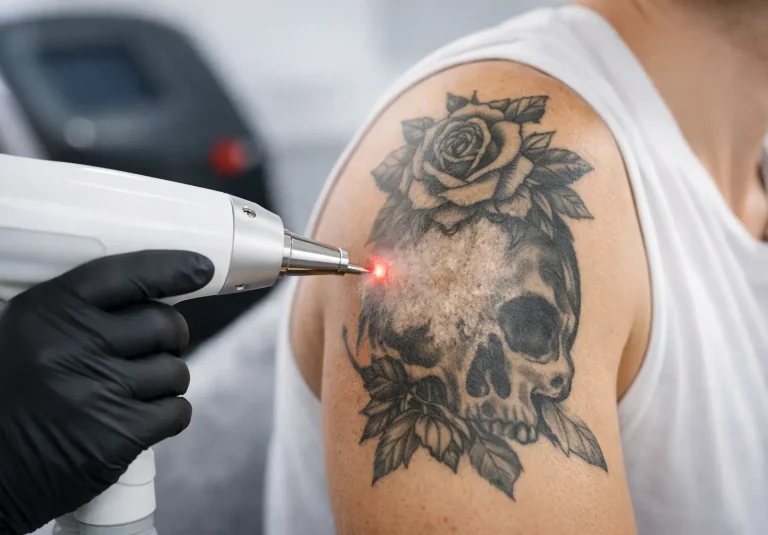
A medical-grade tattoo removal laser delivers highly targeted pulses of light into the ink. Different wavelengths are selected to target different ink colours. The light energy is absorbed by the pigment rather than the surrounding skin, causing the larger ink particles to shatter into much smaller fragments.
Once those particles have been broken down, your lymphatic system gets to work. Your immune system gradually carries away the smaller fragments over the following weeks. This natural clearance process is the reason the tattoo often continues to fade after you leave the clinic.
Laser treatment does not simply erase the tattoo at the appointment. It starts a controlled process that relies on the right technology, carefully chosen settings and your body’s own ability to clear fragmented pigment.
Why tattoo removal takes a course of sessions
A single session can create visible change, particularly in darker, older or more faded tattoos. However, most tattoos require a course because not every ink particle can be safely broken down in one treatment.
Giving the skin time to recover between appointments is essential. It also allows the body to process the fragmented ink before further treatment. Sessions are commonly spaced several weeks apart, although the right interval depends on your skin response, the tattoo itself and your clinician’s assessment.
For some clients, the goal is complete removal. For others, laser tattoo fading is a practical first step before a new design is applied. Fading a tattoo for a cover-up may take fewer appointments than full removal, but this depends on how much pigment needs to be lifted and how much flexibility the tattoo artist needs for the new design.
A realistic treatment plan is more valuable than a fixed promise. Your clinician can assess progress at each stage and adjust your plan where appropriate.
What affects how quickly a tattoo fades?
No two tattoos respond in exactly the same way. Black ink generally responds well because it absorbs a wide range of laser light, while dark blue and dark green may also be treatable with the correct wavelength. Brighter shades can be more variable. Green, light blue, yellow and some red pigments may require specific laser wavelengths, more sessions, or may not clear as completely.
Professional tattoos often contain denser ink placed more deeply in the skin. They can take longer than amateur tattoos, where pigment may be less concentrated or unevenly placed. Older tattoos sometimes respond more quickly because the body has already begun to disperse a small amount of ink naturally.
The tattoo’s location matters too. Areas with stronger circulation, such as the upper body, can sometimes clear more efficiently than tattoos on hands, feet or lower legs. Skin tone, immune health, sun exposure, smoking and the quality of aftercare can all influence the pace of fading.
This does not mean a slower result is a poor result. It simply means that tattoo removal is personal. A consultation and patch test give a safer, more informed indication of how your skin and ink may respond.
What happens during a laser tattoo fading appointment?
Your appointment begins with the area being assessed and prepared. Protective eyewear is worn by everyone in the treatment room, and the clinician selects settings suited to your tattoo, skin type and patch-test response.
During treatment, the laser pulse can feel like a quick flick against the skin, often compared with the snap of a small elastic band. Comfort measures may be available, and sessions are usually relatively short depending on the size and detail of the tattoo.
You may notice an immediate whitening or frosting effect over the ink. This is a temporary reaction caused by the laser energy interacting with the pigment and is not the final result. The area can then feel warm, look red or become slightly raised, much like mild sun exposure. These responses are usually temporary, but your clinician will explain what is normal for your treatment and when to get in touch.
Healing and aftercare support better results
Aftercare is part of the treatment, not an afterthought. Your skin needs a calm, protected environment to recover properly between sessions.
Keep the area clean and follow the aftercare guidance provided by your clinic. Avoid picking, scratching or rubbing the treated skin, even if it feels dry or itchy as it heals. Protecting the area from direct sun exposure is particularly important, as tanned or irritated skin can affect when it is safe to continue treatment.
You may also be advised to avoid swimming, heat, intense exercise or fragranced products for a short period, depending on the treatment area and your skin’s response. If blistering or scabbing occurs, leave it alone and contact your clinic for advice rather than trying to treat it yourself.
Looking after your general wellbeing can support the process too. Staying hydrated, eating well and avoiding smoking may help your circulation and immune system work effectively, although they cannot replace the time your body needs to clear ink.
Is laser tattoo fading safe for every tattoo?
Laser tattoo removal is an established professional treatment, but it is not suitable for every person or every tattoo without assessment. A thorough consultation should cover your medical history, current medication, skin condition, history of scarring and the type of ink involved.
A patch test is especially valuable. It allows the clinician to observe how your skin reacts to a small area before committing to a full session. This helps guide safer treatment settings and gives you a clearer idea of the healing process.
There are potential side effects, including temporary redness, swelling, blistering, changes in skin pigment and, less commonly, scarring. The risk can be reduced with suitable technology, experienced treatment planning, correct session spacing and diligent aftercare, but it cannot be treated as zero. Some cosmetic tattoo inks can also react unpredictably, so brows, lip liner and other permanent make-up need specialist assessment before treatment.
At The Laser Club, tattoo removal plans are consultation-led, with patch testing and professional guidance designed around your skin, tattoo and desired outcome.
When will you see a difference?
Many clients see some fading after their first few appointments, but the most meaningful change is often gradual. Comparing clear photographs taken before each session can be more useful than judging the tattoo day to day, particularly when you are seeing it in the mirror regularly.
Patience matters because rushing sessions does not make the body clear ink faster. In fact, treating before the skin has fully recovered can compromise comfort and treatment planning. The right approach is steady progress, with each appointment building on the last.
If a tattoo no longer feels like part of your story, the next step does not have to be a decision made in haste. A consultation can give you a realistic view of what fading may achieve, how long it may take and the best route towards skin that feels more like your own.
Back to blog