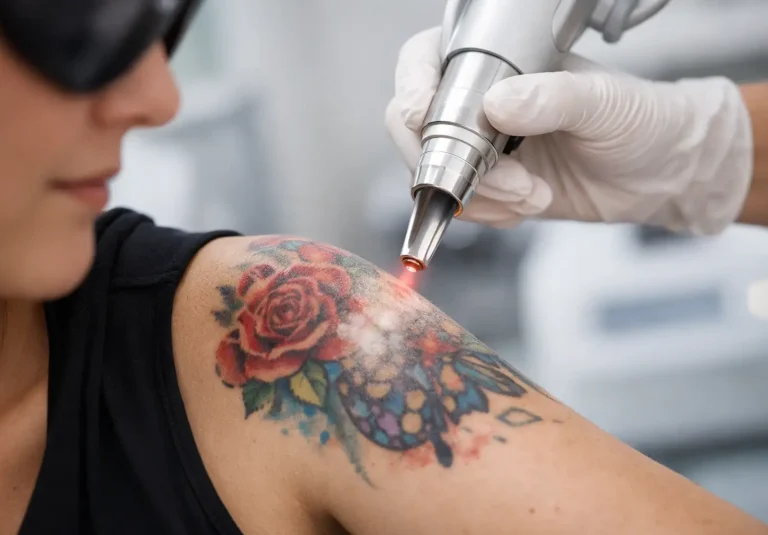
A tattoo that once felt right can become something you are ready to move on from – but bright ink often brings a bigger question: can laser remove coloured tattoos as effectively as black ones? In many cases, yes. However, coloured tattoo removal is more nuanced, because every pigment responds differently to laser energy.
The best results come from a tailored treatment plan rather than a one-size-fits-all promise. Your ink colours, tattoo depth, skin tone, the age of the tattoo and your skin’s response all influence the technology used, the number of sessions required and the level of clearance that can realistically be achieved.
Can laser remove coloured tattoos?
Laser tattoo removal works by delivering short, powerful pulses of light into the tattoo pigment. The pigment absorbs that energy, breaks into smaller particles and is gradually cleared by your body’s natural immune processes between appointments.
Black ink is generally the most responsive because it absorbs a wide range of laser wavelengths. Coloured inks can also be treated successfully, but they need more specific wavelengths. Red, orange and some yellow pigments may respond well to one setting, while greens, blues and purples often require another.
This is why professional assessment matters. A clinic should not simply treat a coloured tattoo using the same approach used for black lettering. The laser wavelength, energy level and treatment intervals need to be selected around the tattoo in front of you, with your skin safety and desired outcome at the centre of the plan.
Which tattoo colours are easiest to remove?
There is no universal answer, particularly when a tattoo contains mixed ink, cover-up work or pigments from different artists. As a broad guide, black and dark grey tattoos tend to fade most predictably. Dark blue may also respond well, although it can take time.
Red and orange inks can be very responsive with the appropriate laser wavelength. Greens and lighter blues are often more challenging, while yellow, pale green, turquoise and white can be particularly resistant. These shades reflect more light rather than absorbing it efficiently, making them harder for the laser to target.
Some inks also behave unpredictably. Cosmetic tattoo pigments, especially those used in permanent make-up, can occasionally darken after treatment before they begin to fade. This is known as oxidation. It does not automatically mean removal is impossible, but it does mean patch testing and expert treatment planning are essential.
Why the ink itself matters
Two tattoos that look the same shade on the surface may contain entirely different pigment formulations. Ink density, layering, metallic components and the quality of the original tattoo can all affect how it reacts.
A professionally applied, saturated sleeve may need more sessions than a small amateur tattoo because there is more pigment for the body to process. Equally, an older tattoo is not always easy to remove, but natural fading over time can sometimes work in its favour.
Your consultation is the place to discuss the likely response of each colour. Honest expectations are part of quality care: the aim may be significant fading, complete clearance where possible, or preparing an existing tattoo for a cleaner cover-up.
How many sessions does coloured tattoo removal take?
Most tattoo removal plans involve a course of sessions, usually spaced several weeks apart to give the skin time to heal and the immune system time to clear fragmented ink. The exact number varies widely. Some tattoos show a visible response early on, while others need a longer programme.
For coloured tattoos, treatment can take more sessions than black ink, particularly where lighter or resistant colours are involved. A realistic plan may account for the tattoo’s size, location, colour mix, age and whether it has been tattooed over previously.
The body part also plays a role. Tattoos on areas with stronger circulation, such as the upper body, may clear more readily than those on hands, feet or lower legs. This is not a guarantee, but it can help explain why two tattoos treated with similar settings do not fade at the same pace.
It is also worth remembering that faster is not always better. Treating too frequently does not force the ink to disappear more quickly. It can increase irritation without allowing enough time for your skin to recover and do the work of clearing the pigment.
Skin tone, safety and patch testing
Safe coloured tattoo removal is about much more than choosing a laser wavelength. Melanin in the skin also absorbs light, so treatment settings must be adjusted carefully for different skin tones. This helps minimise the risk of unwanted changes in pigmentation, blistering or scarring.
A patch test is particularly valuable before treating coloured ink, darker skin tones, cosmetic tattoos or tattoos with an uncertain ink history. It allows the practitioner to see how the pigment and surrounding skin respond before progressing with the full area.
Temporary redness, warmth, swelling and a light frosted appearance on the tattoo are common immediately after treatment. Small blisters or scabbing can also occur as part of the healing process. Your aftercare guidance should be followed closely: keep the area clean, avoid picking, protect it from sun exposure and allow the skin to heal fully before your next session.
If you have a history of keloid scarring, are pregnant or breastfeeding, are taking certain medication, or have an active skin infection around the tattoo, mention this at consultation. A responsible clinic will assess whether treatment is suitable now or whether it should be postponed.
What results can you realistically expect?
Many people begin treatment hoping for a completely blank area of skin. That can be achievable, especially with darker ink, but no reputable practitioner should promise total removal before assessing your tattoo.
Some tattoos leave a faint shadow, slight texture change or a trace of stubborn colour. In other cases, the best outcome may be enough fading to allow a tattoo artist to create a smaller, more considered cover-up. This can be an excellent option if you do not want the original design visible but do not need every last fragment of pigment removed.
The quality of treatment matters. Medical-grade laser technology, carefully selected settings and a practitioner who understands pigment response offer a better foundation for progress than chasing quick fixes. Results are gradual by design, and the changes between sessions can be easier to see in photographs than in the mirror each day.
Choosing a clinic for coloured tattoo removal
The right provider will take time to examine the tattoo rather than offering a fixed price or session estimate without seeing it. They should ask about when the tattoo was done, whether it has been covered up, any previous removal attempts and the outcome you are aiming for.
At The Laser Club, treatment plans begin with a professional consultation and patch test, so your coloured ink, skin type and treatment goals can be assessed properly. You should leave knowing what is likely to respond, what may take longer and how to care for your skin throughout the process.
Cost is understandably part of the decision, but it is worth looking beyond the price of a single session. Coloured tattoo removal is an investment in a series of carefully planned treatments, and packages or payment options can make that journey more manageable.
If a tattoo no longer reflects you, there is no need to decide everything at once. A consultation can give you a clear, realistic view of how your particular colours may respond – and the confidence to choose the next step on your own terms.
Back to blog