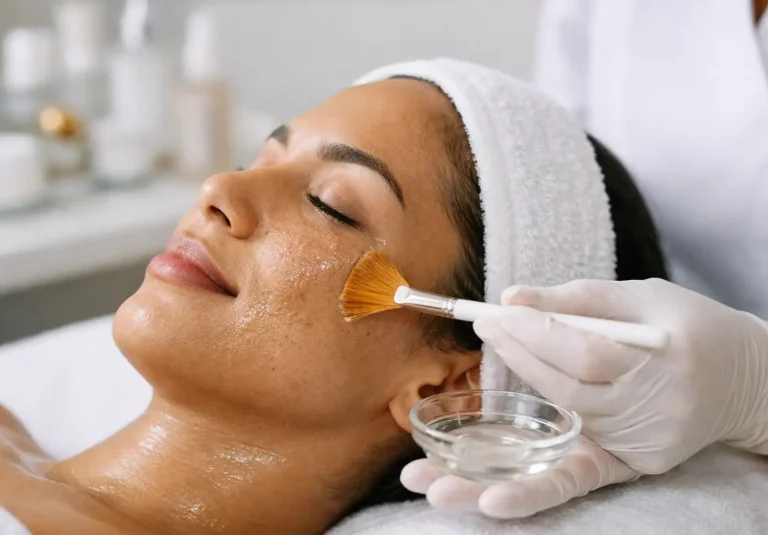
Post-acne marks, sun spots and uneven tone can make skin look tired long after the original concern has passed. A chemical peel for pigmentation is a professional skin treatment designed to encourage controlled exfoliation, helping fresher, more even-looking skin come through over time. The right peel can be a valuable part of a results-led skin plan, but the best approach depends on what is causing your pigmentation, your skin type and how your skin responds to treatment.
What a chemical peel does for pigmentation
A chemical peel uses carefully selected acids to loosen and remove dull, damaged surface skin cells. This supports natural cell turnover and can improve the appearance of discolouration, rough texture, breakouts and fine lines. As the skin renews, areas of excess pigment may gradually appear lighter and more blended with the surrounding complexion.
Pigmentation is not one single issue. It may show up as brown marks after spots, sun-related age spots, freckles, uneven patches or melasma. These concerns can look similar in the mirror but behave very differently, which is why choosing a peel simply because it worked for someone else is rarely the best route.
For post-inflammatory hyperpigmentation – the marks left after acne, ingrown hairs or irritation – a course of carefully managed superficial peels may help improve clarity while also supporting breakout-prone skin. Sun damage may respond well to a different formulation and treatment schedule. Melasma, which is often influenced by hormones, heat and UV exposure, needs especially thoughtful management. It can improve, but it can also return, so ongoing homecare and sun protection matter as much as the in-clinic treatment itself.
Is a chemical peel for pigmentation right for you?
The answer starts with an assessment, not a one-size-fits-all treatment menu. During a professional consultation, your practitioner should look at the depth, pattern and possible trigger of your pigmentation, alongside your skin tone, sensitivity, current skincare and medical history. They can then recommend whether a peel is appropriate or whether another treatment, or a combination approach, is more suitable.
This is particularly important for deeper skin tones. Skin with more melanin can be more prone to post-inflammatory hyperpigmentation if it is over-treated or irritated. That does not mean chemical peels are off limits. It means treatment selection, strength, preparation and aftercare need to be tailored with care.
You may be advised to build your skin barrier first if you are experiencing active irritation, eczema flare-ups, significant sensitivity or a compromised complexion from strong home products. A good plan protects the long-term outcome rather than rushing towards a short-term treatment.
Pigmentation needs a targeted plan
A peel can improve the visible look of pigmentation, but it cannot stop all of the triggers that caused it. Daily broad-spectrum SPF, consistent skincare and avoiding unnecessary irritation are central to maintaining progress. Without them, fresh pigment can develop even after a successful course of treatments.
For some clients, a peel programme may sit alongside professional facials, acne management or skincare chosen to support pigment control at home. Your practitioner may also advise spacing treatments around holidays, periods of high sun exposure or other skin procedures. The goal is clearer, healthier-looking skin without placing it under avoidable stress.
Choosing the right peel depth
Most pigmentation concerns are approached gradually. Superficial peels work mainly within the outermost layers of skin and are often selected for mild uneven tone, post-blemish marks and dullness. They usually involve limited downtime, although some dryness, tightness or light flaking can occur.
Medium-depth peels reach further into the skin and can offer more noticeable resurfacing, but they also require greater recovery time and are not suitable for everyone. A stronger peel is not automatically a better peel. If the skin becomes inflamed, pigmentation can worsen rather than improve, particularly where there is a history of sensitivity or dark marks after irritation.
The active ingredients used may include alpha hydroxy acids, beta hydroxy acids, retinoid-based blends or other professional formulations. Each works differently. For example, some are chosen to refine surface texture while others are better suited to congested, oily or acne-prone skin. Your treatment should be selected for your skin rather than by a trend, a social media recommendation or the promise of a dramatic one-off result.
What happens during a professional peel appointment?
Your skin is cleansed and assessed before the peel is applied in a controlled way. You may feel warmth, tingling or mild prickling while the solution is active. This sensation should be monitored throughout the treatment, and your practitioner will guide you on what is normal for the peel being used.
After the peel has been neutralised or removed where appropriate, calming and protective products are applied. The appointment itself is generally straightforward, but the work that happens before and after it is what supports a safe outcome. At The Laser Club, this starts with a consultation-led recommendation, so your treatment plan reflects your skin goals, lifestyle and level of downtime you can realistically accommodate.
You should leave knowing what to expect over the following days, which products to use and which to pause. Clear aftercare is not an optional extra – it helps reduce the risk of irritation and supports the quality of your result.
When will you see results?
Some clients notice a brighter, smoother look once initial dryness or flaking has settled. Pigmentation, however, is rarely a quick fix. More established marks often need a course of treatments, typically spaced several weeks apart, alongside consistent homecare.
The pace of improvement depends on the type and depth of pigmentation, how long it has been present and how well the skin tolerates treatment. A realistic aim is gradual refinement: clearer-looking tone, softer contrast between dark marks and surrounding skin, and a more polished overall complexion.
Your practitioner may take progress photographs at suitable intervals. These can be helpful because slow, meaningful changes are often easier to see in comparison than day to day. If your pigmentation is not responding as expected, the plan can be reviewed rather than repeatedly applying the same treatment.
Preparing for your peel and caring for skin afterwards
In the days before treatment, you may be asked to pause exfoliating acids, retinoids or other active skincare. Avoid waxing, hair removal creams and other potentially irritating procedures on the treatment area. Tell your practitioner about any new medication, recent facial treatments, cold sores or changes in your skin, as these can affect whether treatment should go ahead.
After a peel, keep your routine gentle. Use the recommended cleanser, moisturiser and SPF, and resist the temptation to pick at peeling skin. Avoid scrubs, strong actives, saunas, steam rooms and intense heat until your practitioner confirms it is appropriate to return to them. Sun protection is essential: UV exposure can deepen existing pigment and compromise the improvement you are working towards.
A little flaking is common with some peels, while others create little visible peeling at all. Neither experience is a measure of success. The purpose is controlled skin renewal, not dramatic shedding.
When to postpone treatment
Chemical peels are not suitable at every moment. Treatment may need to be delayed if you have a sunburn, active infection, open skin, a significant dermatitis flare-up or a recent change in medication that affects skin sensitivity. Pregnancy and breastfeeding can also affect which products and peel formulations are appropriate.
Be open about previous reactions to skincare and procedures. A responsible practitioner would rather adjust your plan than take an unnecessary risk with your skin.
Why professional guidance matters
At-home exfoliating products can be useful when chosen well, but they are not the same as a professional peel programme. Overusing acids, layering too many active ingredients or treating already-irritated skin can disrupt the skin barrier and trigger further discolouration. This is the opposite of what most people want when treating pigmentation.
Professional guidance brings a clearer understanding of your concern, appropriately selected products and a plan that can change with your skin. It also gives you a sensible route if you are new to advanced skin treatments and unsure where to start.
Clearer, more even-looking skin is usually built through consistent decisions rather than one dramatic appointment. Start with an expert assessment, protect your skin from the sun and give a well-chosen treatment plan the time it needs to work.
Back to blog