A small tattoo may take fewer appointments than a large, densely inked design, but size is only one part of the picture. If you are asking how many tattoo removal sessions you will need, the most honest answer is that every tattoo responds differently. A professional consultation is the best way to receive a realistic treatment plan built around your ink, skin and end goal.
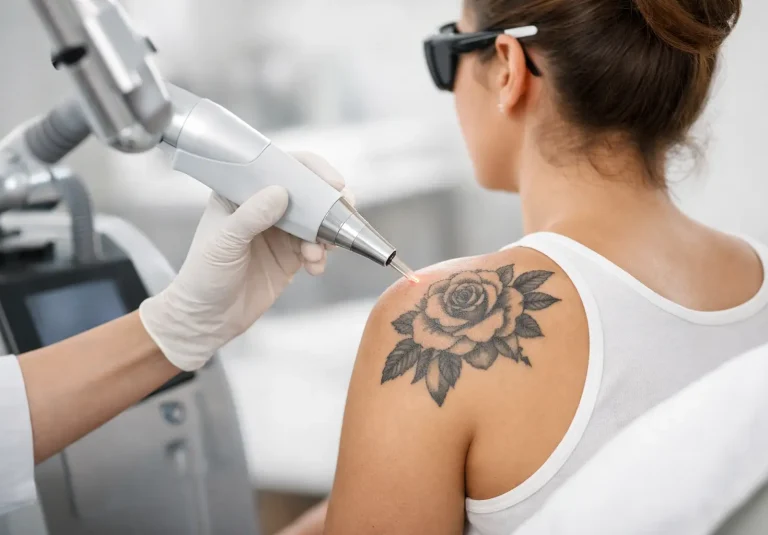
Laser tattoo removal works gradually. Each session breaks tattoo pigment into smaller particles, which your body then clears over time. That means progress is not simply about treating more often. The spacing between appointments is a vital part of achieving a safe, visible fade.
How many tattoo removal sessions are typical?
Most clients need a course of around 6 to 12 sessions for significant fading or full removal. Some lighter, older or amateur tattoos may respond in fewer treatments. Others, particularly large professional tattoos with layered or colourful ink, can require more than 12 sessions.
It is also worth distinguishing between full removal and tattoo fading for a cover-up. If your goal is to create enough space for a new design, you may not need to remove every trace of the original tattoo. In some cases, a smaller number of sessions can lighten the area sufficiently for your tattoo artist to work over it.
During your consultation, your practitioner will assess the tattoo and explain what is achievable. Rather than promising a fixed number before seeing how your skin responds, they will build a plan that can be reviewed as treatment progresses.
What affects the number of sessions you need?
The biggest influence is the tattoo itself. Ink colour, depth, age and density all affect how readily a laser can target and break down pigment. Your skin type, immune response and the location of the tattoo matter too.
Ink colour and pigment type
Black ink is generally the most responsive because it absorbs laser energy effectively. Dark blue and some dark green tones can also respond well, although results vary. Brighter colours such as red, orange, yellow and light blue may need more sessions and specific laser wavelengths to treat them effectively.
White, flesh-toned and cosmetic inks require particular care. Certain pigments can darken temporarily when treated, so an experienced assessment and patch test are especially important before beginning a full course.
Professional versus amateur tattoos
Professional tattoos are often placed deeper in the skin and tend to contain a high concentration of consistent ink. This can mean a longer course, particularly where the design has heavy shading, bold outlines or several layers of work.
Amateur tattoos may be more superficial and use less uniform pigment. They can sometimes clear more quickly, but that is not guaranteed. A tattoo that looks faded on the surface can still hold pigment deeper in the skin.
Age, layering and placement
Older tattoos have often faded naturally over time, which can make them more responsive to treatment. Newer tattoos may take longer, especially if the ink is fresh and dense. Cover-ups can be among the more complex tattoos to remove because they contain multiple layers of pigment.
Tattoos on areas with strong circulation, such as the upper body, may fade more efficiently than those on hands, feet or lower legs. This is not a rule, but blood flow and lymphatic drainage play a role in how the body processes fragmented ink particles.
Your skin and healing response
Laser settings should always be selected with your skin type and safety in mind. The right approach is not necessarily the fastest-looking approach. A carefully tailored treatment plan helps protect the surrounding skin while working towards progressive fading.
Your body also needs time to clear the treated pigment. General health, circulation, smoking status and how well you follow aftercare advice can all influence the pace of visible change. Results are individual, which is why reviewing your progress throughout the course is more useful than relying on an online estimate alone.
Why sessions are spaced apart
Tattoo removal appointments are usually spaced around 6 to 8 weeks apart, although your practitioner may recommend longer intervals depending on your skin, the treatment area and your response. Treating too soon does not force the ink to disappear faster. It can increase stress on the skin before it has fully recovered.
The laser does its work during the appointment, but much of the fading happens afterwards as your body clears the shattered pigment. You may notice the tattoo continues to soften between sessions, particularly in the weeks after treatment.
A longer overall timeline can feel frustrating when you are ready to move on from a tattoo. However, allowing proper recovery time is part of a considered, results-led plan. It helps your practitioner assess how the ink is responding and adjust the next session if needed.
What happens at a tattoo removal consultation?
A quality consultation should give you more than a session estimate. It is your opportunity to discuss why you want the tattoo removed, whether you are aiming for full clearance or a cover-up, and any concerns about pain, healing or downtime.
Your practitioner will look at the tattoo’s colours, size, density, placement and condition. They should also ask about your skin, medical history, medication and previous reactions to laser treatments. A patch test is often used to check how your skin and pigment respond before a full treatment begins.
At The Laser Club, tattoo removal is approached as a tailored programme rather than a one-size-fits-all appointment. This makes it easier to plan around work, social commitments and your budget, while keeping the focus on safe, progressive results.
What does tattoo removal feel like?
Most people describe laser tattoo removal as a quick, sharp sensation, often compared with an elastic band snapping against the skin. The feeling lasts only while the laser is active, and treatment time depends on the size of the tattoo. Smaller designs can be treated relatively quickly, while larger pieces understandably take longer.
Afterwards, the area may feel warm, look red or become slightly swollen. Some people experience whitening of the skin immediately after treatment, known as frosting. This is a temporary response. Your practitioner will explain what to expect and provide aftercare instructions suited to the area treated.
You should avoid picking, scratching or exposing the area to unnecessary heat and sun while it heals. If blisters occur, leave them intact and contact your clinic if you have any concerns. Protecting the skin between sessions supports the best possible treatment experience.
Can you make tattoo removal work faster?
There is no safe shortcut that replaces the right laser technology, sensible treatment intervals and proper healing. Booking appointments closer together than advised is unlikely to speed up clearance and may compromise recovery.
What you can do is follow your aftercare guidance closely, keep the treated skin protected from sun exposure, stay well hydrated and maintain a generally healthy routine. These measures support your skin as it recovers, but they cannot guarantee a particular number of sessions.
It is also wise to be cautious of fixed-price claims that promise complete removal in a very small number of appointments. Tattoo removal is a process, and an ethical provider will be clear about the variables from the start. The goal is not to rush your skin. It is to achieve the best fade possible with an approach that is appropriate for you.
If you are ready to make a tattoo less visible, remove it completely where possible, or prepare it for a fresh cover-up, start with a consultation. Seeing the tattoo in person is the clearest way to turn an uncertain estimate into a treatment plan you can feel confident about.
Back to blog