Breakouts rarely arrive alone. Congested pores, excess oil, post-blemish marks and uneven texture can make skin feel difficult to manage, even when you are consistent with your skincare. A HydraFacial for acne prone skin can be a valuable professional treatment when congestion and dullness are part of the picture, but timing and treatment selection matter.
HydraFacial is not a cure for acne, nor should it replace medical advice for severe or painful breakouts. What it can offer is a controlled, hygienic way to cleanse, exfoliate and hydrate the skin while helping to lift surface debris from congested pores. For many clients, that means skin looks clearer, feels smoother and is better prepared for a tailored homecare routine.
What HydraFacial can do for acne prone skin
Acne-prone skin is not simply “dirty” skin, and aggressive cleansing can often make matters worse. The aim is not to strip the complexion until it feels tight. It is to remove the build-up of dead skin cells, oil and impurities without compromising the skin barrier.
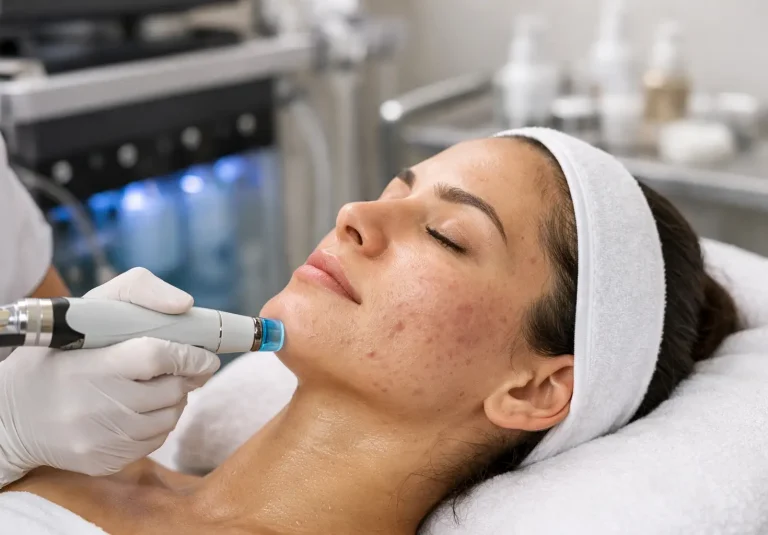
A HydraFacial treatment uses a vortex-style device to cleanse and exfoliate the skin, extract congestion and infuse targeted hydrating ingredients. Unlike manual extraction alone, the process is designed to be consistent and gentle, with the treatment adapted around the areas that need the most attention.
For clients with mild congestion, blackheads and an oily T-zone, this can help create a fresher, more refined appearance. Makeup may sit more smoothly, skin can feel less congested and regular professional care may help reduce the cycle of picking at blemishes at home.
The hydration stage is particularly relevant. Acne-prone skin can still be dehydrated, especially if it has been exposed to drying spot treatments, harsh cleansers or frequent exfoliation. Supporting hydration can help the complexion feel more balanced rather than overworked.
Is a HydraFacial suitable during an acne breakout?
It depends on the type and severity of acne. A client with occasional whiteheads, blackheads or mild breakouts may be suitable for a tailored facial, provided the skin is not highly inflamed or irritated. Treatment can focus on cleansing and reducing congestion while avoiding areas that are sore or actively broken.
If you have widespread inflamed acne, cystic lesions, open skin, infection or significant sensitivity, a HydraFacial may not be the right first step. Suction and exfoliation over active, painful lesions can aggravate already stressed skin. In these cases, a consultation is essential to assess whether treatment should be postponed, modified or supported with another professional approach.
This is why a one-size-fits-all facial can be disappointing for acne concerns. The right plan takes account of your current breakout level, skin sensitivity, medication, previous treatments and the products you are using at home.
Acne, congestion and acne scarring need different plans
These concerns are often grouped together, but they respond differently. Congestion refers to blocked pores, blackheads and a rougher skin texture. Active acne involves inflammation and breakouts. Acne scarring describes longer-term textural changes, while post-inflammatory marks are the red, pink or brown discolouration that can remain after a blemish has healed.
HydraFacial is most useful for surface congestion, dullness, excess oil and general skin maintenance. It may also support a clearer-looking complexion between other treatments. However, it will not remove deep acne scars in one appointment, and it is not designed to treat severe acne as a medical condition.
For persistent scarring or uneven texture once acne is controlled, treatments such as microneedling, professional peels or other targeted skin programmes may be more appropriate. A tailored plan can combine treatments at the right stage, rather than asking one facial to solve every concern.
What happens during a treatment?
Your appointment should begin with a professional skin consultation. This is the point to mention prescription acne treatments, retinoids, antibiotics, recent chemical peels, sun exposure, allergies and any history of sensitivity. These details influence what can safely be used on your skin and whether now is the right time to proceed.
The treatment itself generally moves through cleansing, exfoliation, extraction and hydration. If your skin is acne-prone, the practitioner may adjust the intensity, avoid particularly inflamed areas and select suitable treatment steps based on how your complexion presents that day.
The experience is comfortable for most clients. You may notice a light pulling sensation during extraction, but it should not feel like harsh squeezing or leave the skin feeling raw. A well-planned appointment is about effective skin cleansing with respect for your barrier, not chasing dramatic redness as proof that something has worked.
Afterwards, many people see an immediate glow and smoother feel. If you are prone to congestion, the more meaningful result is often how your skin behaves over the following weeks when HydraFacial is paired with consistent homecare and appropriate treatment intervals.
How often should you have HydraFacial for acne prone skin?
There is no universal schedule. Some clients choose a HydraFacial every four to six weeks as part of their skin maintenance routine, particularly when oiliness and blocked pores tend to return. Others may begin with a more focused programme and then move to maintenance once the skin is more settled.
More frequent is not automatically better. Over-treating acne-prone skin can lead to irritation, increased sensitivity and disruption to the protective skin barrier. Your treatment frequency should reflect your skin’s response, not simply your diary.
At The Laser Club, the most effective approach starts with understanding the concern behind the concern. If recurring congestion is linked to unsuitable products, dehydration, hormonal fluctuations or active inflammatory acne, the plan needs to reflect that. Professional treatment works best when it is part of a realistic routine you can maintain.
Getting better results between appointments
A HydraFacial gives your skin a professional reset, but everyday habits determine how well those results hold. Keep your routine simple, especially if you are prone to breakouts. Use a gentle cleanser, avoid scrubbing or picking, and introduce active products only as advised for your skin.
Daily SPF is also essential. It helps protect healing skin and can reduce the chance of post-breakout marks becoming more noticeable after sun exposure. Choose formulas suited to your skin type and avoid assuming that oily skin does not need moisturiser. Lightweight, appropriate hydration is often part of keeping oil production and sensitivity in better balance.
Avoid using strong exfoliating acids, retinoids or abrasive scrubs immediately before and after treatment unless your practitioner has advised otherwise. Skin that has just been professionally exfoliated needs calm, protective care rather than a cupboard full of active ingredients.
When to book a consultation first
A consultation is particularly worthwhile if you are unsure whether your breakouts are active acne, congestion or sensitivity. It is also recommended if you are taking acne medication, have recently used isotretinoin, experience frequent painful spots, or have noticed scarring or persistent pigmentation.
The consultation is not a sales formality. It is how a specialist assesses your skin properly, sets realistic expectations and recommends a treatment route that fits your priorities. You may be an excellent candidate for HydraFacial, or a different treatment may deliver a better outcome at this stage.
Clearer-looking skin is rarely the result of one harsh treatment or a miracle product. It comes from choosing the right support for your skin as it is now, then giving that plan the consistency it deserves.
Back to blog