If shaving leaves you with irritation by the following morning, or your waxing appointments are dictating your diary, professional hair removal can be a worthwhile change. The question is whether laser versus electrolysis is the better route for your hair, skin and goals. Both treatments can reduce the burden of unwanted hair significantly, but they work in very different ways – and the right answer is rarely one-size-fits-all.
For larger body areas, laser hair removal is often the practical choice because it treats many hairs at once. Electrolysis has a different strength: it can treat individual hairs of any colour, including those that laser cannot target effectively. A professional consultation is where those differences become a plan that makes sense for you.
Laser versus electrolysis: the key difference
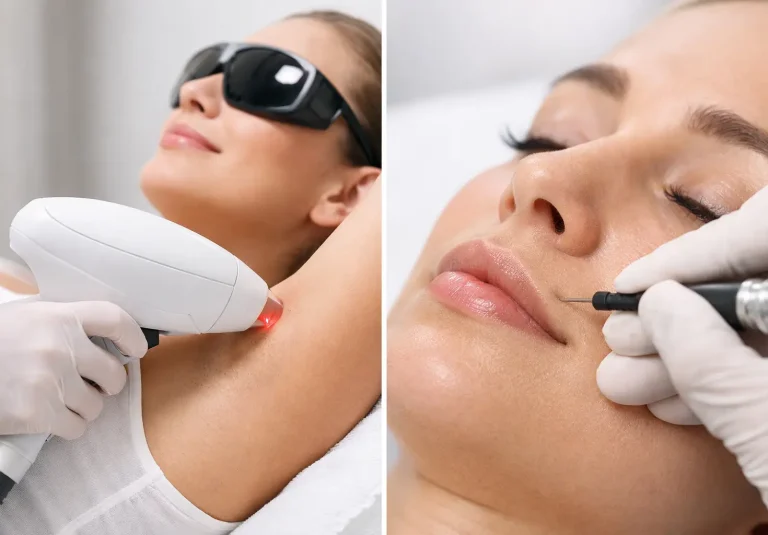
Laser hair removal uses focused light energy that is absorbed by pigment in the hair. That energy travels down the hair shaft to the follicle, disrupting its ability to produce new growth. Because the laser can cover a sizeable area in each pulse, it is especially suited to areas such as the underarms, legs, bikini line, back, chest and full face.
Electrolysis works one follicle at a time. A very fine probe is placed into the natural opening of the follicle, then a small electrical current is used to treat the growth centre. It does not depend on pigment, so it can be used on blonde, grey, white and red hairs as well as dark hair.
Neither approach is a quick fix. Hair grows in cycles, and treatment is most effective when hairs are in the active growth phase. That is why a course of appointments is needed, with spacing tailored to the area and your individual response.
Which delivers longer-lasting results?
Electrolysis is recognised as a permanent hair removal method when a follicle has been successfully treated. However, permanent does not mean that a whole area is cleared in a handful of appointments. Every visible hair must be treated individually, and dormant follicles can become active later. Hormones can also stimulate new growth over time.
Laser is generally described as permanent hair reduction. A completed course can create a major, lasting reduction in growth, with remaining hair often becoming finer, lighter and much easier to manage. Many clients enjoy long periods of smoothness, then choose occasional maintenance sessions if needed.
For someone with dark, coarse hair across the legs or bikini line, laser can deliver the most efficient route to a visible reduction. For a few pale chin hairs, electrolysis may be more appropriate. In some cases, the strongest plan is a combination: laser to reduce the bulk of darker hair, followed by electrolysis for lighter or more resistant hairs.
Suitability depends on hair colour, skin tone and area
The contrast between hair and skin matters with laser treatment. Darker hair contains more pigment for the laser to target, which is why it tends to respond particularly well. Hair that is naturally blonde, white, grey or red has little or no suitable pigment, so laser is unlikely to provide a meaningful result.
Skin tone also needs careful consideration. The right medical-grade laser technology, settings and practitioner expertise are essential for treating different skin types safely and effectively. This is not a treatment to select from a menu without assessment. A consultation and patch test allow the practitioner to review your skin, hair density, medical history and treatment area, then establish whether laser is suitable.
Electrolysis can treat every natural hair colour and skin tone, making it a valuable option for small, precise areas. It can be particularly helpful around the upper lip, chin, brows and other areas where individual hairs need attention. That precision also makes it less efficient for a full leg, back or chest.
Hormonal hair growth deserves an honest conversation too. Conditions such as PCOS, perimenopause and certain medications can affect the pattern and persistence of growth. Treatment can still be highly worthwhile, but you may need a longer course or maintenance plan. The aim is realistic, sustained improvement rather than a promise that biology will stand still.
Treatment time is often the deciding factor
This is where laser and electrolysis differ most clearly. A laser session for the underarms may be completed in minutes, while larger areas take longer but can still be treated efficiently. Appointments are usually spaced several weeks apart so the next group of hairs enters the right growth stage.
Electrolysis appointments can range from short sessions for a small patch of hair to longer sessions for more extensive work. Since each follicle is treated separately, clearing a dense area can involve a considerable time commitment over many months. It is a precise treatment, not a fast one.
If your priority is reducing regular shaving across large areas before holidays, gym sessions or busy working weeks, laser tends to fit more comfortably into your routine. If the concern is a small number of hairs that remain despite laser, or hairs with too little pigment for laser to see, electrolysis may be worth the extra time.
What do laser and electrolysis feel like?
Comfort is personal, and the area being treated matters. Laser is often compared with the quick snap of an elastic band against the skin, followed by warmth. Modern systems may incorporate cooling to support comfort during treatment. Coarser hairs and more sensitive areas can feel more intense, but sessions are usually relatively short.
Electrolysis creates a brief sensation as each follicle is treated. On small areas, this can be very manageable. Over a longer appointment or on a sensitive part of the face or body, it may feel more demanding than laser simply because the process is repeated hair by hair.
Some temporary redness and sensitivity can occur after either treatment. Your practitioner should explain suitable aftercare, including protecting the treated skin from heat and sun exposure where advised, avoiding friction and resisting the urge to tweeze hairs between appointments. Following aftercare supports both your comfort and your results.
Why a consultation matters before choosing
The best treatment plan begins with more than a glance at the hair you would like gone. Your practitioner should assess hair colour and thickness, skin tone, the size of the area, previous hair-removal methods and any relevant health information. They should also ask what result would genuinely make a difference to your daily life.
A patch test is particularly important for laser treatment. It helps establish safe, effective settings for your skin and provides an opportunity to discuss what to expect. Be cautious of providers offering a fixed package before they have assessed your suitability. Professional hair removal should be tailored, not guessed.
At The Laser Club, consultations are designed to give you clarity before you commit. You can discuss the areas that bother you, your desired outcome and how treatment can fit around your lifestyle. Where a course of laser sessions is the appropriate choice, package options and 0% interest payment plans can make a professional treatment programme more manageable.
Making the right choice for your goals
Choose laser when you have darker hair in a larger area and want an efficient, long-term reduction in regular shaving, waxing or trimming. It is often the best starting point for body hair and can also be highly effective for suitable facial hair.
Choose electrolysis when the hair is light, grey, white, blonde or red, or when you are targeting a smaller area with precision. It is also an excellent consideration for isolated hairs that remain after a successful laser course.
The most useful question is not which treatment is universally better. It is which option gives you the most realistic route to smoother skin, less upkeep and greater confidence in the areas you want to treat. A considered consultation turns that answer into a plan you can feel comfortable starting.
Back to blog