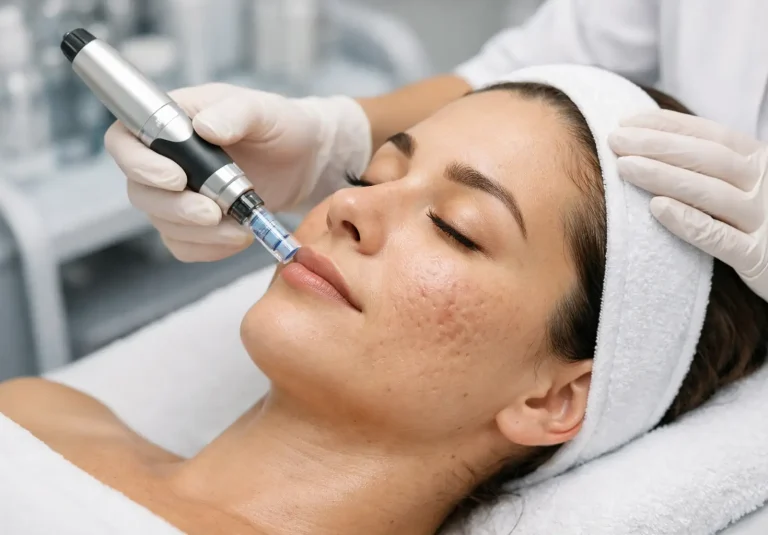
Acne may have settled, but the marks it leaves behind can still catch the light, affect how make-up sits and make skin feel less like your own. Microneedling for acne scars is a professional skin treatment designed to improve the look of uneven texture gradually, helping skin appear smoother, firmer and more even over a course of carefully planned sessions.
The key word is gradually. Scar revision is not about promising flawless skin after one appointment. It is about choosing the right approach for your scar type, skin condition and goals, then giving your skin the time and support it needs to respond.
How microneedling works on acne scarring
Microneedling uses a professional device containing very fine, sterile needles to create controlled micro-channels in the skin. This process stimulates the skin’s natural repair response, encouraging collagen and elastin production over time. Collagen is one of the structures that helps skin look plump, supported and smooth.
With acne scarring, this renewed collagen activity can help soften the appearance of indented scars and improve the transition between scarred and unaffected skin. The treatment is usually most effective for atrophic scars, meaning scars that sit below the surrounding skin rather than raised scars.
Professional treatment matters because needle depth, technique and treatment intervals need to be tailored to the area being treated. Skin on the cheeks may need a different approach from the forehead, jawline or temples. A consultation gives your practitioner the opportunity to assess this properly rather than applying a one-size-fits-all treatment.
Which acne scars can microneedling improve?
Microneedling is often a strong option for rolling scars and some boxcar scars. Rolling scars create a gentle wave or unevenness across the skin, while boxcar scars tend to have more defined, broad depressions. Both can respond well when collagen stimulation is delivered consistently as part of a treatment programme.
Very narrow, deep ice-pick scars are less likely to improve substantially with microneedling alone. These scars often require a different or combined clinical approach. Similarly, raised scars, including keloid scarring, are not usually treated with conventional microneedling in the same way and need an individual professional assessment.
Acne marks can also be confused with acne scars. Red, pink or brown marks left after a spot has healed are changes in pigment or blood vessels rather than changes in skin texture. They may fade with time, targeted skincare, peels or other treatments, whereas indented scarring usually needs a collagen-stimulating approach. Many clients have a combination of both, which is why a tailored plan can make more sense than selecting a single treatment in isolation.
What happens during a microneedling appointment?
Your appointment should begin with a review of your skin, current skincare routine, medical history and desired outcome. Active breakouts, recent irritation or certain medicines may mean treatment needs to be postponed. Treating inflamed acne is not the same as treating established scars, and controlling active breakouts first can help prevent new marks from forming.
On the day, skin is cleansed thoroughly and a topical numbing cream may be used to make the treatment more comfortable. The microneedling device is then passed across the planned areas at settings selected for your skin and scar pattern. Most people describe the sensation as manageable, with more sensitivity around the forehead, upper lip and bony areas of the face.
Treatment itself is relatively efficient, although allow time for preparation and aftercare advice. Skin commonly looks pink or red afterwards, similar to a moderate sunburn. This normally settles over the next day or two, though the exact recovery period varies according to treatment intensity and individual skin sensitivity.
When will you see results?
Some people notice a fresher-looking complexion as the initial redness settles, but meaningful scar improvement takes longer. Your skin needs time to build new collagen, so results typically become more visible over several weeks and continue to develop after each session.
Most scar programmes involve a course of treatments, often spaced around four to six weeks apart. The number needed depends on the depth and type of scarring, how your skin responds and how much improvement you would like to achieve. Shallow texture concerns may require fewer sessions than long-standing, deeper scars.
This is also where realistic expectations protect your investment. Microneedling can noticeably improve texture and soften scars, but it cannot erase every scar or recreate skin that was never scarred. The aim is visible refinement: smoother skin, less shadowing from depressions and greater confidence when you see yourself in daylight or without make-up.
Preparing for treatment and caring for skin afterwards
The quality of your aftercare has a real effect on comfort and recovery. Before treatment, your practitioner may ask you to pause certain active skincare products, such as retinoids or exfoliating acids, for a suitable period. You should also tell them about any medication, cold sores, skin conditions, allergies or recent aesthetic treatments.
After microneedling, keep your routine gentle. Use the products recommended by your practitioner, avoid touching the treated area unnecessarily and do not apply make-up until advised that it is appropriate. Heat, heavy exercise, swimming pools, saunas and steam rooms are best avoided during the immediate recovery period, as they can aggravate already sensitised skin.
Daily broad-spectrum SPF is essential, particularly while skin is recovering. UV exposure can worsen pigmentation and undermine the clearer, more even finish you are working towards. This is not only a post-treatment consideration. Consistent sun protection supports healthier-looking skin throughout a scar treatment programme.
Is microneedling suitable for every skin tone?
One of the advantages of microneedling is that it can be suitable for a broad range of skin tones when performed appropriately. However, anyone prone to post-inflammatory hyperpigmentation needs a particularly considered plan. This is more common in some skin tones and can be triggered by inflammation, including overly aggressive treatment.
That does not mean you should rule out treatment. It means your practitioner should assess your skin carefully, select appropriate settings and give clear advice on preparation, aftercare and sun protection. A cautious, personalised programme is far more valuable than chasing the most intensive treatment possible.
Microneedling may not be suitable if you have active cystic acne, an active skin infection, open wounds, a tendency to keloid scarring or certain health conditions. Pregnancy, some medications and recent use of prescription acne treatments can also affect whether and when treatment is recommended. This is why an honest consultation is an essential part of safe, results-led care.
Why professional microneedling is different from at-home needling
At-home rollers and needling devices can be tempting, especially when scarring has affected confidence for years. However, they do not offer the same level of precision, sterility or tailored depth as an in-clinic device. Used incorrectly, they can cause irritation, spread bacteria, worsen pigmentation or create further damage to an already vulnerable skin barrier.
Professional microneedling is planned around your skin rather than simply applied to it. At The Laser Club, this begins with understanding whether your concern is active acne, pigmentation, textured scarring or a combination, so your treatment recommendation is based on the result you want to see.
Making the right choice for your scars
The best scar treatment is not necessarily the most talked-about one. It is the one that matches the type of scarring you have, respects your skin’s tolerance and is delivered consistently enough to create change. For some people, microneedling is the central treatment in their programme. For others, it works best alongside professional skincare or other clinically selected treatments.
If acne scars are still affecting the way you feel about your skin, a consultation can bring clarity. A considered plan, realistic milestones and professional aftercare give you a far better starting point than trying to treat every scar in the same way.
Back to blog