Those painful red bumps that appear after shaving, waxing or plucking can make even a simple hair-removal routine feel like a constant battle. So, can laser treat ingrown hairs? Laser hair removal can be an excellent long-term option for reducing the underlying cause: the amount of hair growing back into the skin.
Rather than repeatedly removing hair at the surface, professional laser treatment targets the pigment in the hair follicle. With a course of sessions, hair typically grows back finer, slower and less densely. Fewer hairs means fewer opportunities for them to curl, become trapped and trigger inflammation.
How laser hair removal helps with ingrown hairs
An ingrown hair develops when a hair grows back into the skin instead of rising through the follicle opening. This is particularly common in areas where hair is coarse or curly, including the bikini line, underarms, beard area, chest and legs. Shaving very close to the skin can leave a sharp hair tip that is more likely to re-enter it, while waxing and plucking can sometimes disrupt the natural direction of growth.
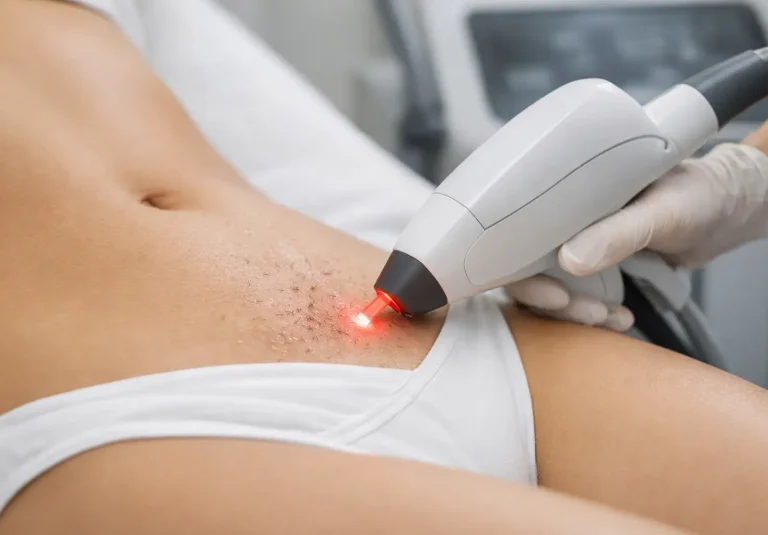
Laser hair removal works differently. During treatment, controlled laser energy is absorbed by pigment in the hair and travels down to the follicle. The aim is to impair future hair growth while protecting the surrounding skin. As the number and density of active hairs reduce over a planned course, the cycle of shaving, irritation and ingrown hairs can become far easier to manage.
This is why laser is often chosen by clients who are tired of dealing with recurring razor bumps and discolouration after hair removal. It does not simply disguise the problem for a few days. It can reduce the need for the methods that keep aggravating it.
Can laser treat ingrown hairs that are already there?
Laser hair removal is best viewed as a preventative treatment for recurrent ingrown hairs, rather than a quick fix for an active, inflamed bump. It can help reduce the hairs causing repeated episodes, but it does not extract an ingrown hair or immediately clear an infection.
If an area is sore, swollen, broken or showing signs of infection, it may need time to settle before treatment. Picking, digging at the skin or attempting to remove deeply trapped hairs yourself can increase inflammation, scarring and post-inflammatory pigmentation. A pharmacist, GP or dermatologist can advise if you have painful pustules, spreading redness, fever, repeated infections or scarring.
For calmer skin with stubborn marks left behind by previous ingrown hairs, a clinic may also discuss complementary skin treatments at the right stage of your plan. The priority is always to first reduce the ongoing trigger and make sure the skin is suitable for treatment.
What results can you realistically expect?
Most clients need a course of laser hair removal sessions because hair grows in cycles. Laser is most effective when hairs are in their active growth phase, and not every follicle will be in that phase on the day of your appointment. Sessions are therefore spaced apart to progressively target new growth.
You may notice hair starting to shed in the weeks after an early session, followed by slower and patchier regrowth. Over time, many clients find they shave less often and experience fewer bumps, less friction and a smoother-looking finish. Results vary with the treatment area, hair colour and thickness, hormonal factors, skin type and consistency with appointments.
Laser hair removal offers long-term hair reduction, not a guarantee that every hair will disappear permanently. Some people choose occasional maintenance sessions, particularly in hormonally influenced areas such as the face, chin and lower abdomen. Even when some hair remains, making it finer and less dense can still make a meaningful difference to ingrown-hair flare-ups.
Is laser suitable for every skin and hair type?
A professional consultation is essential. Laser works by identifying pigment in the hair, so dark, coarse hairs generally respond particularly well. Very blonde, grey, white or red hairs contain little pigment and may not respond as effectively to laser treatment.
Skin tone matters too, not because darker skin cannot be treated, but because the right technology and settings are vital for safe, effective results. A specialist-led clinic will assess your skin and hair, discuss your medical history and carry out a patch test before beginning a course. This allows the treatment to be tailored to you rather than based on a one-size-fits-all setting.
You should also share information about medications, active skin conditions, recent tanning, pregnancy, sun exposure and any history of pigmentation changes. Certain medicines and skincare ingredients can make skin more sensitive to light. Honest consultation answers help your practitioner decide whether treatment should go ahead, be adjusted or be postponed.
Preparing for laser treatment when you get ingrown hairs
The preparation advice can feel different if you are used to waxing or plucking, but it is designed to give laser the best chance of reaching the follicle. Avoid waxing, threading, epilating and plucking for several weeks before your session, as these methods remove the hair laser needs to target.
You will usually be asked to shave the treatment area shortly before your appointment, following the guidance provided by your clinic. Shaving leaves the follicle in place while removing excess hair at the surface. Use a clean, sharp razor, shave in the direction of growth where possible, and avoid going over the same area repeatedly.
Avoid sun exposure, tanning beds and fake tan before treatment, as well as strong exfoliating products if your practitioner advises against them. Arrive with clean, dry skin free from deodorant, body oils, perfume and make-up in the treatment area.
Aftercare that supports smoother skin
It is normal for treated skin to look slightly red or feel warm for a short time after laser hair removal. Cool the area if advised, wear loose clothing around sensitive zones, and avoid heat-heavy activities such as hot baths, saunas and intense exercise for the period recommended by your practitioner.
Do not pick at any hairs or bumps as they shed. Gentle care is usually far more helpful than aggressive exfoliation. Once the skin has settled and your practitioner confirms it is appropriate, mild exfoliation can help keep surface skin clear between sessions. Daily SPF is particularly important on exposed areas, as irritated skin can be more prone to uneven pigmentation after UV exposure.
If you develop blistering, significant swelling, persistent pain or an unexpected skin reaction, contact your treating clinic promptly for advice. Professional aftercare is part of achieving a good result, not an afterthought.
Why a tailored plan matters
Ingrown hairs can look similar to acne, folliculitis, keratosis pilaris or an irritated skin barrier, yet these concerns do not always need the same approach. A proper consultation helps identify whether laser hair removal is likely to address the main trigger, and whether any other treatment or medical advice should come first.
At The Laser Club, treatment plans are built around your skin, hair type, chosen area and confidence goals. A consultation and patch test give you space to ask practical questions, understand the expected session schedule and decide whether a course is the right investment for you. Package options and 0% interest payment plans can also make a professional programme easier to plan around your lifestyle.
If recurrent ingrown hairs are affecting how comfortable you feel in your skin, you do not need to keep treating the same flare-up every few weeks. A consultation can help you move towards a longer-term approach, with a plan designed for smoother skin and less time spent managing unwanted regrowth.
Back to blog