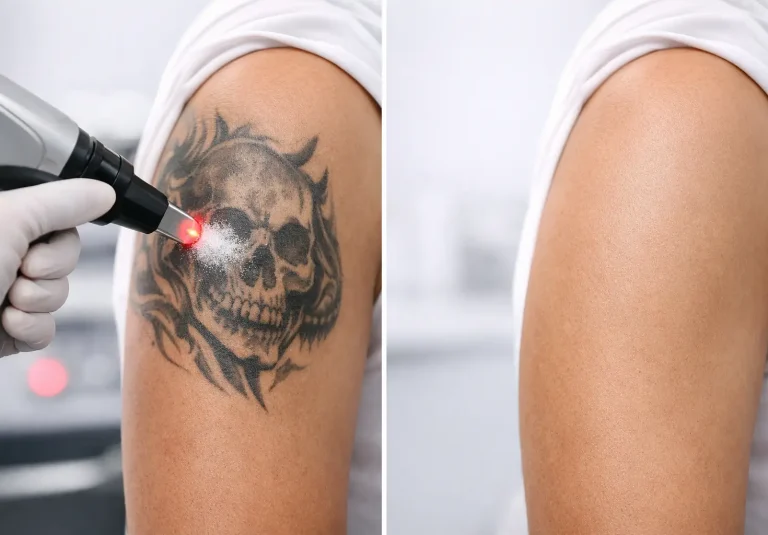
A laser tattoo removal before after journey is rarely a single dramatic transformation. The most convincing results are built gradually: ink softens, lines break apart and the tattoo becomes less visible between carefully planned sessions. Knowing what happens at each stage helps you set realistic expectations and choose treatment with confidence.
What laser tattoo removal before after results really show
Before-and-after photographs can be useful, but they only tell part of the story. A clear result depends on the tattoo itself, your skin, the laser technology used and the time allowed for healing. Two tattoos that look similar at the start may respond very differently.
Laser tattoo removal works by delivering controlled pulses of light into the ink. The energy breaks large pigment particles into smaller fragments, which your body can gradually clear through its natural processes. The laser targets the tattoo pigment rather than removing the surface of the skin, which is why professional treatment can fade ink while preserving the surrounding area as far as possible.
Immediately after a session, the tattoo may look temporarily lighter or appear frosted white. This is a normal short-term reaction caused by the laser interacting with the pigment. Redness, warmth and mild swelling can follow, and some clients experience tiny pinpoint bleeding or blistering. These early changes are not the final result.
Over the following weeks, the treated area settles and fading becomes easier to assess. In many cases, the best visible change happens after the skin has healed, not in the first few days. Progress is often uneven at first, with some sections of ink fading ahead of others. This is particularly common in dense, detailed or multi-coloured tattoos.
Why every tattoo fades at a different pace
A treatment plan should be tailored, not based on a fixed promise of a certain number of sessions. Black ink usually responds most predictably because it absorbs laser energy effectively. Dark blue and green may also respond well with the appropriate wavelength, while lighter shades such as yellow, white and some pastel inks can be more challenging.
Professional tattoos often contain more pigment placed deeper in the skin, so they may take longer than amateur or stick-and-poke tattoos. That does not mean they cannot achieve excellent fading. It simply means patience, suitable technology and correctly spaced sessions matter.
The placement of the tattoo can also influence the pace of results. Areas with stronger circulation may clear fragmented ink more efficiently than hands, feet or lower legs. Your immune response, overall health, skin tone, age of the tattoo and whether it has been treated before all play a part too.
For some clients, the goal is complete removal. For others, it is significant fading ahead of a cover-up. A cover-up preparation plan may require fewer sessions, as the aim is to create a lighter, more workable canvas rather than remove every trace of pigment. Being clear about your end goal at consultation allows your practitioner to recommend a more focused treatment programme.
How many sessions will you need?
Most tattoos need multiple sessions, commonly six to twelve or sometimes more. Sessions are usually spaced several weeks apart to give the skin time to recover and the body time to process the disrupted ink. Treating too frequently does not speed up removal and can place unnecessary stress on the skin.
Your practitioner should assess the tattoo in person before giving an indication of likely treatment numbers. They will look at ink colours, density, depth, location and the condition of your skin. A patch test is also an essential part of safe laser treatment. It helps assess how your skin and the ink respond before a full session is carried out.
This consultation-led approach is particularly valuable if you have darker skin, a history of scarring, existing skin conditions, are taking medication, or have previously had an unexpected reaction to cosmetic treatment. The right settings and a considered approach are central to both results and skin safety.
What the treatment feels like and what happens afterwards
Laser tattoo removal is often described as the sensation of an elastic band snapping against the skin, although everyone’s pain threshold is different. The location and size of the tattoo matter too. Areas with less natural padding, such as fingers, ankles or ribs, can feel more intense than the upper arm or thigh.
A professional clinic will explain what to expect and use appropriate cooling measures to make treatment more comfortable. Sessions themselves are often relatively quick, especially for smaller tattoos, but you should allow time for consultation, preparation and aftercare advice.
After treatment, keep the area clean and follow the aftercare instructions given by your practitioner. You may be advised to avoid heat, strenuous exercise, swimming, sun exposure and fragranced products for a short period while the skin recovers. Do not pick at scabs, blisters or flaking skin. Letting the area heal naturally reduces the risk of irritation, infection and avoidable changes to skin texture.
Sun protection is especially important throughout your course of treatment. Tanned or sun-exposed skin can affect treatment suitability and may increase the risk of pigmentation changes. If you have a holiday planned, speak to your clinic about timing your session around sun exposure rather than trying to fit treatment in at the last minute.
How to assess genuine progress between sessions
It is easy to scrutinise a tattoo every day and feel that nothing is changing. A better approach is to take clear photographs in the same lighting before your first appointment and before each follow-up session. This makes gradual fading easier to recognise and gives your practitioner a useful record of response.
Look beyond whether the tattoo appears lighter overall. You may notice softened edges, gaps in solid areas, less intensity in black shading or certain colours breaking up first. These are all meaningful signs that the ink is responding.
Be cautious with before-and-after images that do not show the number of sessions, the time frame, tattoo age or the treatment objective. A small black tattoo faded for a cover-up is not directly comparable with a large, saturated colour piece being treated for complete removal. Honest expectations are more valuable than dramatic promises.
Choosing a clinic for tattoo removal
Tattoo removal is not a treatment to approach as a quick beauty fix. The quality of assessment, laser technology, hygiene standards and aftercare can affect both your experience and your outcome. Choose a clinic that makes time to understand the tattoo, explains limitations clearly and builds a plan around your skin rather than offering a one-size-fits-all package.
At The Laser Club, tattoo removal begins with a professional consultation and patch test, so your treatment plan can be shaped around your tattoo, skin type and desired result. Packages and 0% interest payment plans can also make a multi-session programme more manageable, without compromising on the clinical approach your skin deserves.
The best before-and-after result is not defined by someone else’s timeline. It is a safe, well-managed process that moves you closer to skin you feel comfortable showing, whether that means a clean removal or a fresh start for a new design.
Back to blog