A tattoo can represent a former chapter, a style that no longer feels like you, or simply a decision made before you gave it enough thought. Whatever the reason, this laser tattoo removal guide is designed to replace uncertainty with a clear, realistic view of treatment – from your first consultation through to the fading process and aftercare.
Laser tattoo removal is not an instant fix, and the best results come from a carefully planned course of professional treatments. The aim is progressive fading, using medical-grade laser technology and enough recovery time between appointments for your body to do its part.
How laser tattoo removal works
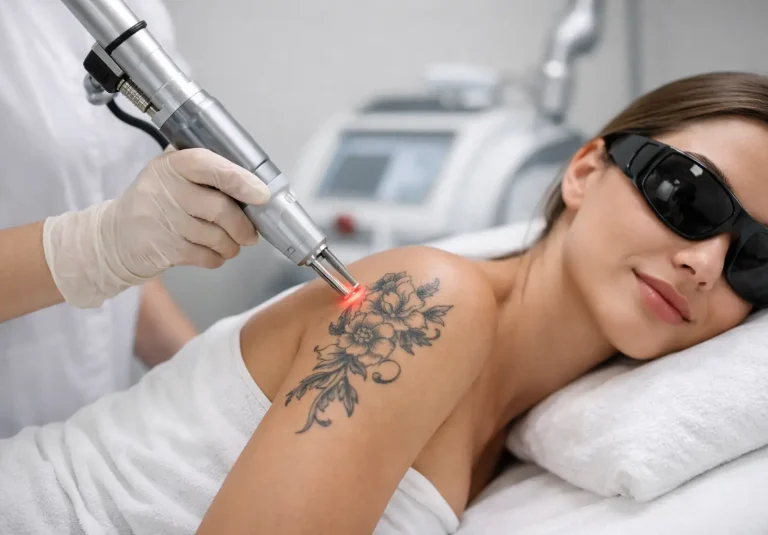
Tattoo ink sits beneath the surface of the skin in particles that are too large for the body to clear naturally. A specialist laser delivers short, controlled pulses of energy into the tattoo. This energy targets the pigment, breaking larger ink particles into smaller fragments.
Over the following weeks, your immune system gradually removes those fragments. That is why fading continues after an appointment and why spacing treatments properly matters. More sessions delivered too closely together will not necessarily produce faster results. Your skin needs time to recover, and your body needs time to process the disrupted ink.
Professional laser tattoo removal is tailored to the tattoo rather than treated as a one-size-fits-all service. Ink colour, tattoo depth, placement, size and your skin type all influence the approach. A consultation and patch test help establish a suitable treatment plan before a full session takes place.
What affects how many sessions you need?
It is natural to want a precise number before you begin, but no responsible clinic can promise an exact outcome without assessing the tattoo. Many tattoos require a course of sessions, often with several weeks between each one. Some fade more readily than others, while certain colours or densely packed designs need greater patience.
Ink colour and tattoo quality
Black and dark blue inks generally respond well to laser treatment because they absorb laser energy effectively. Brighter colours can be more variable. Green, blue, red and yellow pigments may need specific wavelengths and can take longer to fade. White or flesh-toned inks require particular caution, as they can occasionally darken after treatment before further fading is possible.
Professional tattoos often contain more concentrated ink placed deeper in the skin, so they may take more sessions than an amateur design. However, older tattoos may already have faded naturally over time, which can work in your favour.
Size, placement and your circulation
Larger tattoos naturally take longer to treat because there is more ink to break down. The tattoo’s position can matter too. Areas with stronger circulation, such as the upper body, may clear fragmented ink more efficiently than hands, feet or lower legs.
Your general health, immune response and ability to follow aftercare all play a role. This is not a judgement on fitness or lifestyle. It simply reflects that laser removal works with your body’s natural clearance process.
Your consultation and patch test
A good tattoo removal journey starts before the laser is switched on. At consultation, your practitioner should look at the tattoo closely, discuss its history and ask about your medical background, skin concerns and treatment goals. Are you looking for complete removal, a significant fade, or enough clearance for a cover-up tattoo? Each goal can shape the recommended plan.
A patch test is a small, controlled treatment area used to assess how your skin responds. It helps your practitioner select appropriate settings while giving you a better idea of what the sensation and immediate after-effects may be like. It is an essential step for safe, personalised care, not an optional extra.
At The Laser Club, treatment plans are built around your individual skin, tattoo and desired outcome. This consultation-led approach allows for realistic expectations and a course that respects both visible results and skin health.
Does laser tattoo removal hurt?
Most clients describe the feeling as quick, sharp snaps against the skin, sometimes compared with an elastic band. The sensation varies depending on the tattoo location, size and your own pain threshold. Bony or sensitive areas can feel more intense than fleshier areas.
The encouraging part is that each laser pass is usually brief. Cooling methods may be used to improve comfort during treatment, and your practitioner can talk you through what to expect before starting. If you are nervous, say so. A professional clinic should make space for questions and help you feel in control throughout the appointment.
What your skin may look like afterwards
Immediately after laser tattoo removal, the treated area may look white or frosted for a short time. Redness, warmth, mild swelling and tenderness are also common. Some clients experience small blisters, pinpoint bleeding or scabbing as the skin heals. These responses can be part of the normal healing process, but your practitioner will explain what is expected for your treatment and what requires advice.
Avoid picking, scratching or bursting blisters. Interfering with healing skin can increase the chance of infection, scarring or changes in pigmentation. Keep the area clean, protect it from friction and follow the aftercare instructions given to you.
For the first days after treatment, practical aftercare usually includes:
- Keeping the area clean and dry, then using any recommended dressing or soothing product as directed.
- Avoiding hot baths, saunas, swimming pools and strenuous exercise until the skin has settled.
- Wearing loose clothing where possible to reduce rubbing on the treated area.
- Keeping the tattoo out of direct sun and using high-factor sun protection once the skin has healed.
- Contacting the clinic promptly if you are concerned about unusual pain, spreading redness, discharge or prolonged swelling.
Your skin should be fully settled before another session is considered. Sun exposure, active tanning and certain medications can also affect when treatment is suitable, so be open with your practitioner about any changes between appointments.
Is laser tattoo removal safe for every tattoo?
Laser treatment is a well-established professional option, but it is not right for everyone at every moment. Pregnancy, some medical conditions, particular medications, active skin infections and recent sun exposure may mean delaying treatment. Skin conditions around the tattoo also need to be assessed carefully.
There are risks to understand, including temporary redness, blistering, pigment changes and, more rarely, scarring. The likelihood can be reduced through appropriate technology, experienced treatment planning, patch testing and diligent aftercare, but it cannot be reduced to zero. Be wary of anyone who guarantees complete removal without marks or promises a fixed number of sessions before they have assessed your tattoo.
A cover-up is another consideration. If your goal is new artwork rather than full removal, you may not need to remove every trace of ink. A few well-planned sessions can create a lighter canvas for your tattoo artist, potentially saving time and limiting unnecessary treatment.
Planning treatment around real life
Tattoo removal rewards consistency, but it should also fit around work, holidays and your social life. The healing period means it is sensible to avoid booking just before a beach break, an important event where the area will be exposed, or a period when you cannot protect it from sun and friction.
Ask about package options once your practitioner has assessed the likely course. A tailored package can make an ongoing plan more manageable, particularly when appointments need to be spaced over months. The focus should never be on rushing through sessions. It should be on steady progress, healthy healing and a result that supports how you want to feel in your skin.
The first step is simply a professional consultation. Bring your questions, be honest about your goal, and give yourself the time to make a decision you will feel confident about.
Back to blog