A tattoo can represent a moment, a relationship, a style choice or simply a version of you that no longer feels right. Choosing tattoo removal is not about regretting the past. It is about having the freedom to make a change with professional support, realistic expectations and a plan designed around your skin.
Laser tattoo removal is a process rather than a one-visit treatment. The right technology, skilled treatment planning and careful aftercare all matter. While many tattoos can be significantly faded or removed, every result depends on factors including the ink, placement, age of the tattoo and your body’s natural response.
How laser tattoo removal works
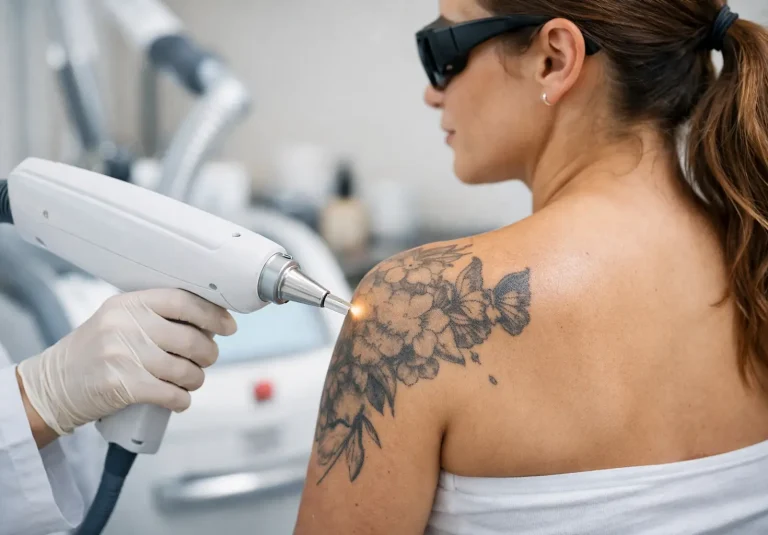
Professional laser tattoo removal works by delivering very short, targeted pulses of energy into the tattoo ink. The energy breaks larger ink particles into much smaller fragments. Your immune system then gradually clears those fragments away over the following weeks.
The laser is attracted to pigment rather than the surrounding skin, which is why choosing the right settings for your skin tone and tattoo is essential. Different wavelengths may be used to target different ink colours, while treatment levels are adjusted carefully to balance effective fading with skin safety.
This is not the same as trying to exfoliate, bleach or remove a tattoo at home. Topical products cannot reach ink held deep in the dermis, and harsh DIY approaches can lead to irritation, scarring or changes in pigmentation without removing the tattoo. A consultation-led clinical approach gives you a far safer, more controlled route forward.
What affects tattoo removal results?
No reputable clinic should promise a fixed number of sessions before assessing your tattoo. Some simple black tattoos respond quickly, while others need a longer programme. During a consultation, your practitioner should look at the tattoo itself, your skin and your overall treatment goals before recommending a plan.
Ink colour and density
Black ink often responds very well to laser treatment because it absorbs laser energy effectively. Dark blue and some darker green inks can also fade well. Lighter shades, including yellow, white, pale green and certain pastel colours, can be more resistant and may require more sessions or may not clear completely.
Professional tattoos can contain dense, deeply placed ink and may take longer to remove than amateur tattoos. However, this is not a hard rule. An older professional tattoo may already have faded considerably, while a newer amateur tattoo may contain stubborn pigment. Layered cover-ups are often among the most time-intensive cases because there is simply more ink to treat.
Tattoo age, location and size
Older tattoos may respond more quickly because the body has already broken down a small amount of ink over time. Larger tattoos naturally take longer because each session can only cover a safe, manageable treatment area.
Location matters too. Areas with good circulation, such as the upper body, can sometimes fade more efficiently than areas further from the heart, including the hands, feet and lower legs. This is one reason tattoo removal is highly individual: your body plays an active role in the process.
Skin tone and skin health
All skin tones can be assessed for laser tattoo removal, but treatment settings and intervals need to be selected with care. Skin with more melanin may require a more cautious approach to reduce the chance of temporary lightening or darkening of the surrounding skin.
Your practitioner will also ask about sun exposure, skin conditions, medication and any history of scarring. A tan, active skin irritation or certain medicines can mean it is better to delay treatment. That is sensible treatment planning, not a setback.
How many tattoo removal sessions will I need?
Most people need a course of treatments, commonly spaced around six to eight weeks apart, although your recommended interval may vary. The time between appointments is not wasted time. It gives your skin time to recover and allows your body to process the fragmented ink.
A small, faded black tattoo may need fewer sessions than a large, colourful or covered-up design. It is also common for fading to be uneven at first, particularly where ink was applied at different depths. Progress should be assessed across the course, rather than judged solely after one appointment.
If your aim is a cover-up rather than full clearance, you may not need to remove every trace of the original tattoo. Often, several sessions to lighten dense areas can create a much better canvas for new artwork. Being clear about this goal at your consultation helps shape the most suitable programme and investment.
Does laser tattoo removal hurt?
Sensation is subjective, but many clients describe laser tattoo removal as feeling like a quick elastic-band snap against the skin, with a warm sensation afterwards. Treatment is fast, particularly for smaller tattoos, and professional cooling can make the experience more comfortable.
The level of discomfort can depend on the area being treated. Bony areas or places with thinner skin, such as ankles, fingers and ribs, can feel more sensitive than fleshier areas. Your practitioner should talk you through what to expect, check in throughout the appointment and advise on appropriate comfort measures.
It is normal for the treated area to feel warm, appear red or develop temporary swelling afterwards. Some people experience light blistering or pinpoint bleeding, particularly with dense ink. These responses should be explained before treatment so you know what is expected and when to contact the clinic for advice.
Your consultation and patch test matter
A professional consultation is where safe, results-led tattoo removal begins. It is an opportunity to discuss the tattoo’s history, your desired outcome, medical information and any concerns you have about discomfort, downtime or cost.
A patch test is usually carried out before a full session. This allows the practitioner to see how your skin responds to an appropriate laser setting and helps inform your treatment plan. It is a small but valuable stage in making sure your programme is tailored rather than based on guesswork.
At The Laser Club, tattoo removal consultations are designed to give you a clear view of what is achievable for your tattoo, how your treatment course may look and how to prepare for each session. A realistic plan is always more valuable than an overconfident promise.
Preparing for your appointment
Arrive with clean skin and avoid applying perfumes, oils, fake tan or active skincare products over the treatment area. Keep the area protected from sun exposure in the weeks before your appointment, as treating tanned or sunburnt skin increases the risk of unwanted pigmentation changes.
Avoid picking or shaving over any irritated skin. If you have a cold sore history and are having treatment near the mouth, tell your practitioner in advance, as preventative advice may be needed. Let the clinic know about new medication, pregnancy, recent procedures or any change in your health before each session.
Tattoo removal aftercare: protecting the skin as it heals
Aftercare supports your comfort and helps reduce avoidable complications. Your practitioner will provide instructions specific to the area treated, but the general principle is simple: keep the skin clean, cool and protected while it recovers.
For the first few days, avoid heat, friction and activities that may irritate the area. This usually means skipping hot baths, saunas, swimming, intense exercise and tight clothing over the tattoo. Do not pick at scabs, blisters or flaking skin. Allow them to heal naturally.
Protecting the area from sunlight is especially important throughout your treatment course. Once the skin has fully healed, use high-factor SPF to help minimise the risk of pigmentation changes. If you notice increasing pain, spreading redness, discharge, significant swelling or any reaction you are unsure about, contact your clinic promptly for guidance.
Is tattoo removal right for you?
Laser tattoo removal can be a powerful choice if an unwanted design affects how you feel in your clothes, at work, in photographs or simply when you look in the mirror. It can also be practical preparation for a cover-up. Yet the best candidates are those who are willing to commit to a course of appointments and understand that complete removal cannot be guaranteed in every case.
The right next step is not to compare your tattoo with someone else’s result online. It is to have it assessed properly. With a personalised plan, appropriate intervals and considered aftercare, you can make a confident, informed decision about the change you want to make.
Back to blog